 All stories
The Soul of the Altbau: Why Vienna's Century-Old Apartments Still Captivate
Step inside Vienna's beloved Altbau apartments: the elegant buildings raised around 1900 whose soaring ceilings, ornate stucco and tall windows still feel utterly timeless. I explore the history and hallmark details that define them, how to style these grand rooms for modern living, and how a careful virtual renovation can breathe fresh life into their classic charm.
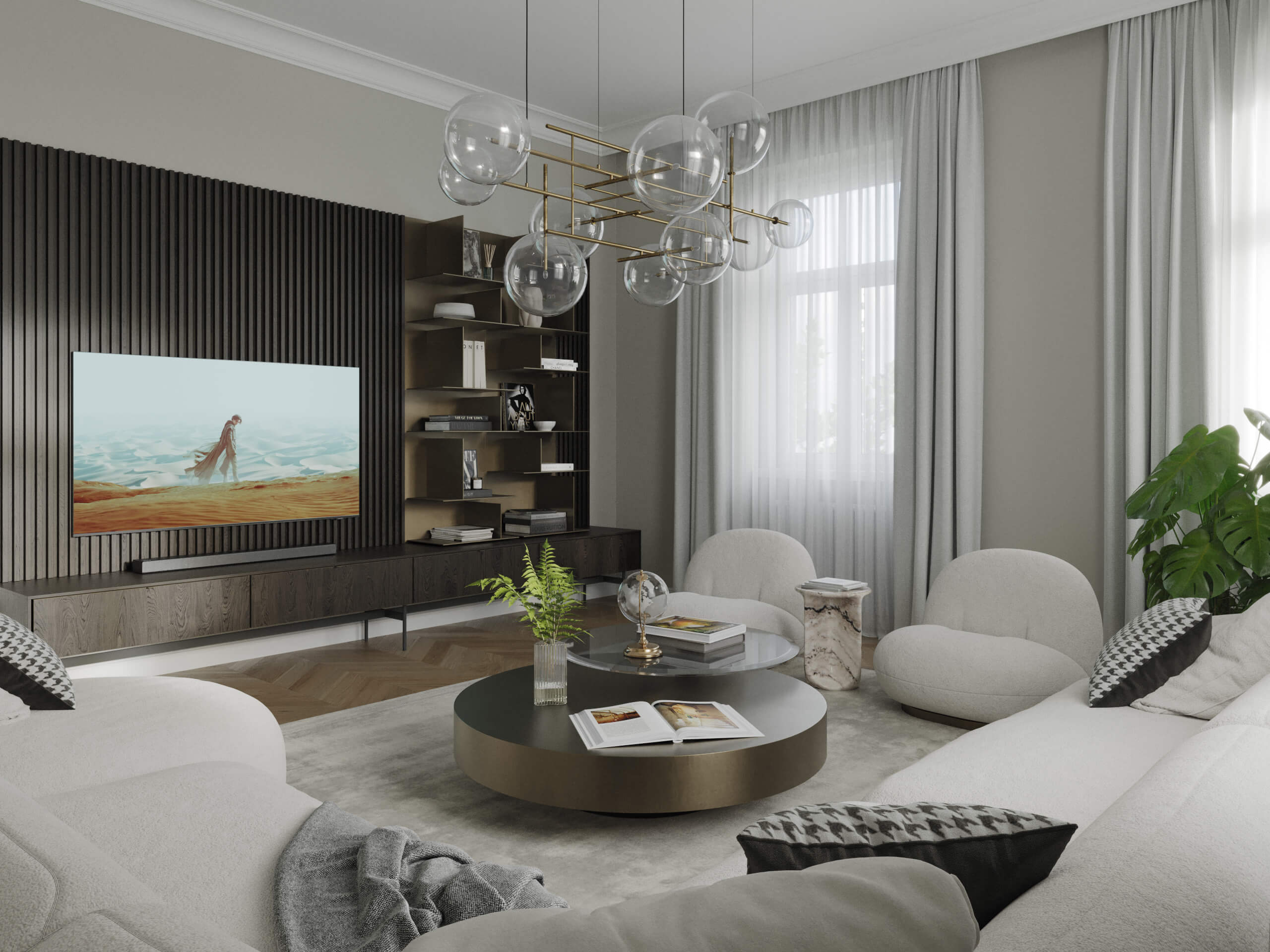
The quiet magic of a Vienna Altbau
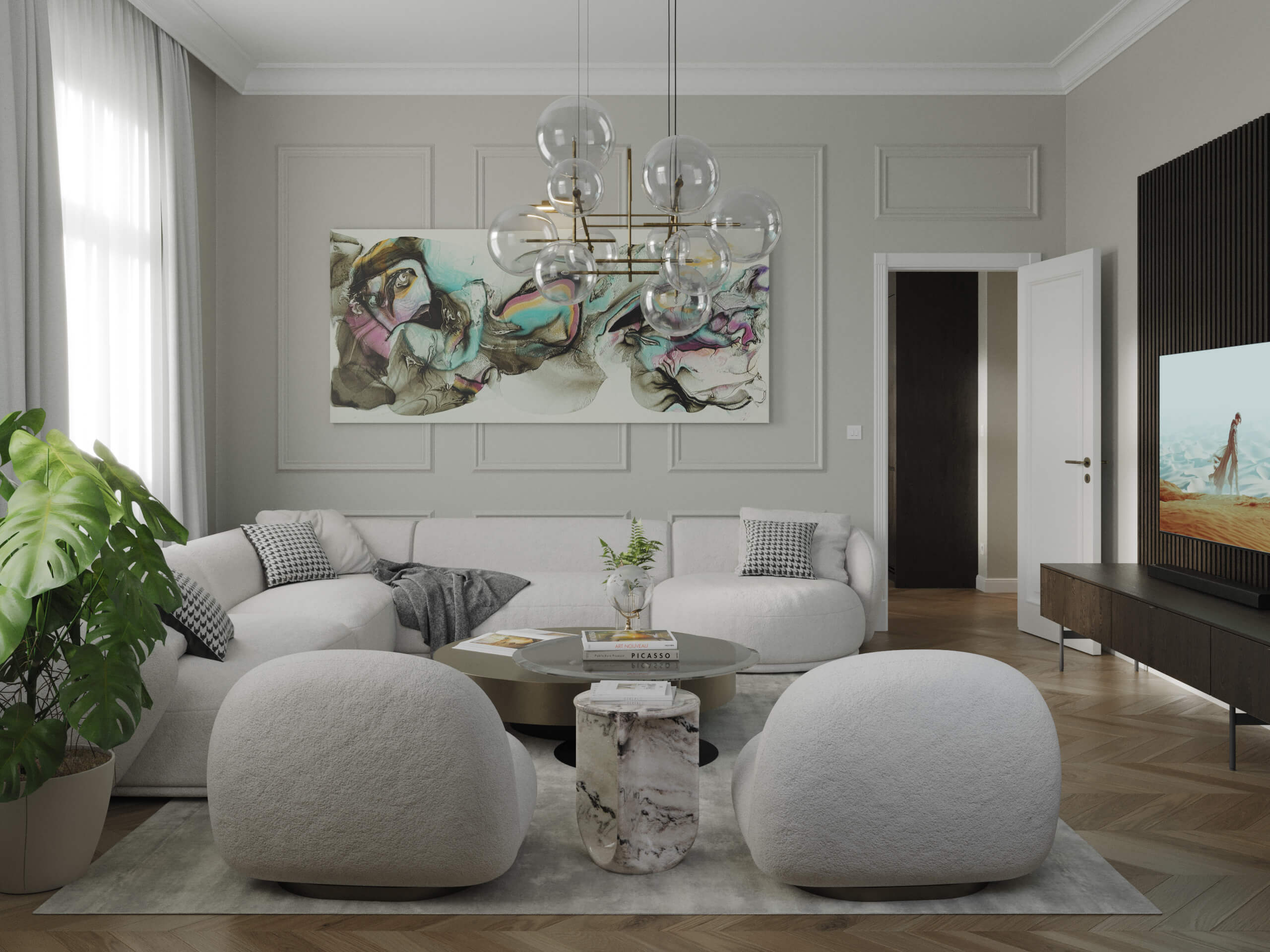
There is a particular feeling that comes over you when you step into a Vienna Altbau for the first time. The ceilings soar far above your head, light pours through tall windows onto a herringbone parquet floor, and a delicate run of stucco traces the line where the wall meets the ceiling. Even before a single piece of furniture arrives, the room already has a soul.
The word "Altbau" simply means "old building" in German, but in Vienna it carries far more weight than that. It refers to the graceful apartment houses raised before the First World War, and to this day they remain the most sought-after homes in the city. I have spent years reimagining these spaces in 3D, and the more time I spend inside them, the more convinced I become that their appeal is not mere nostalgia. It is design that was built to last.
This is my love letter to the Altbau: where these buildings came from, the details that define them, how to furnish them for modern life, and how I breathe new life into the tired ones.
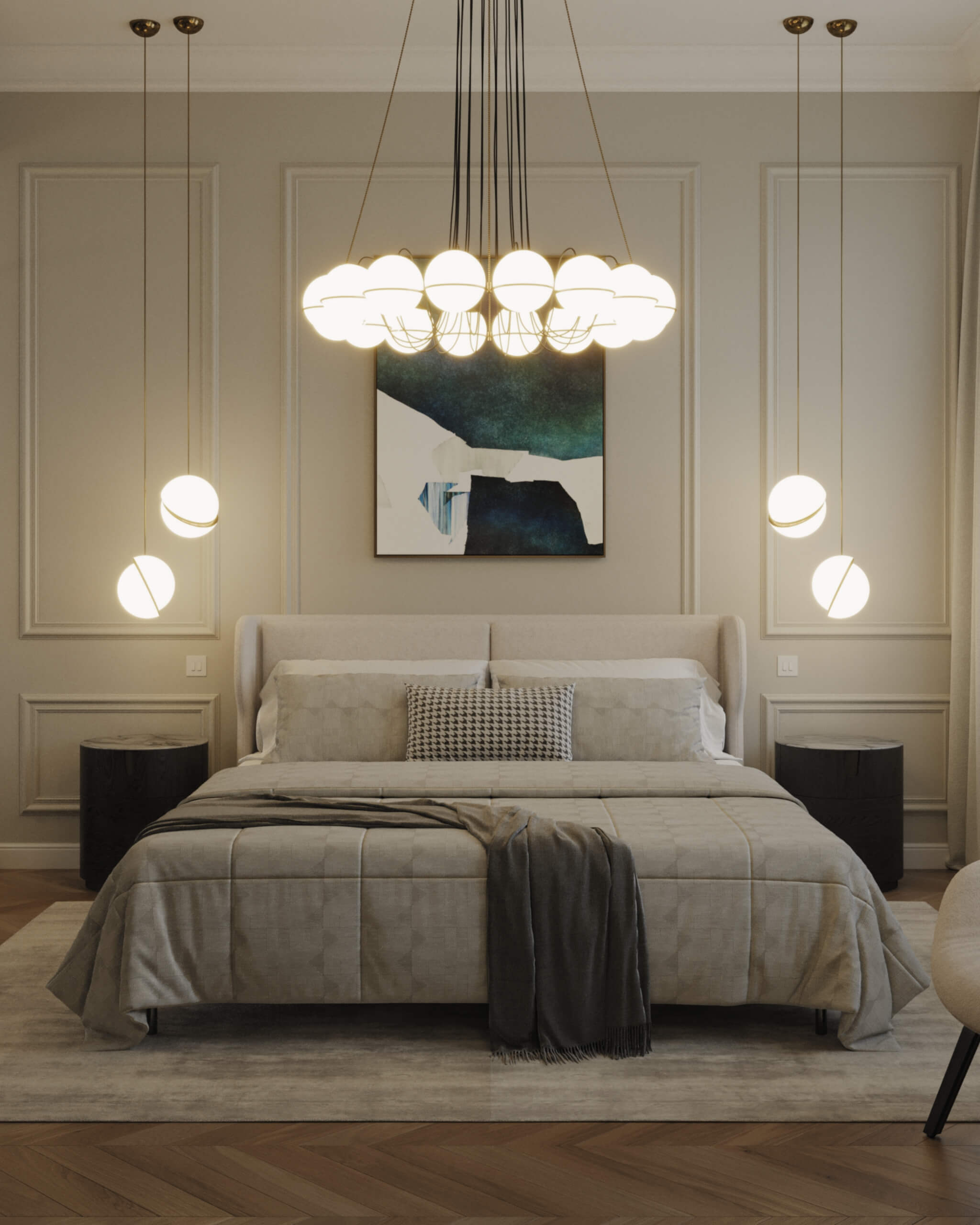
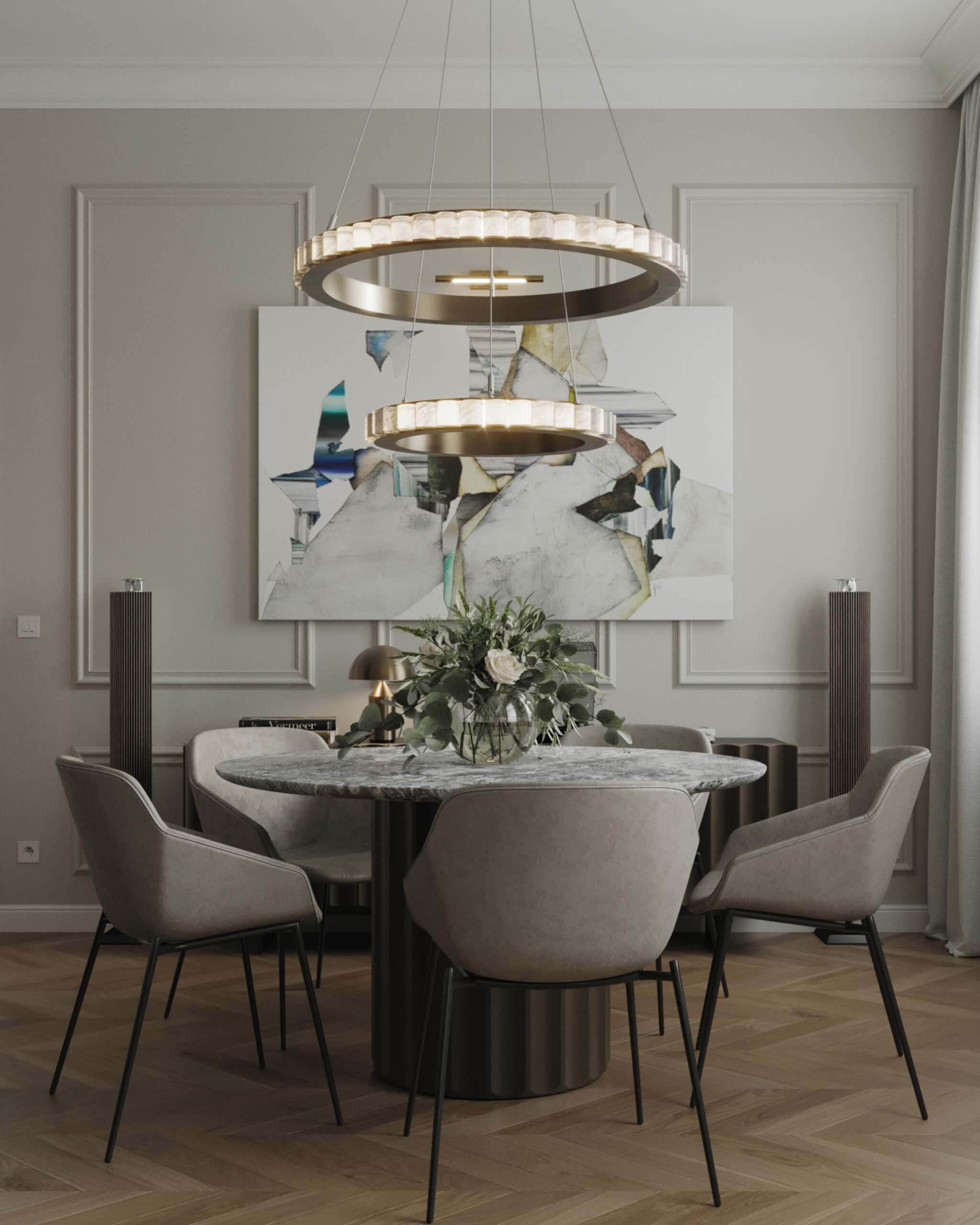
Built to last: the Gründerzeit era
Most of Vienna's Altbau apartments date from the Gründerzeit, the "founders' period" of rapid growth that ran from roughly 1848 until the outbreak of war in 1914. As the city expanded and the great Ringstrasse boulevard took shape, entire districts of elegant residential buildings rose to house a booming population.
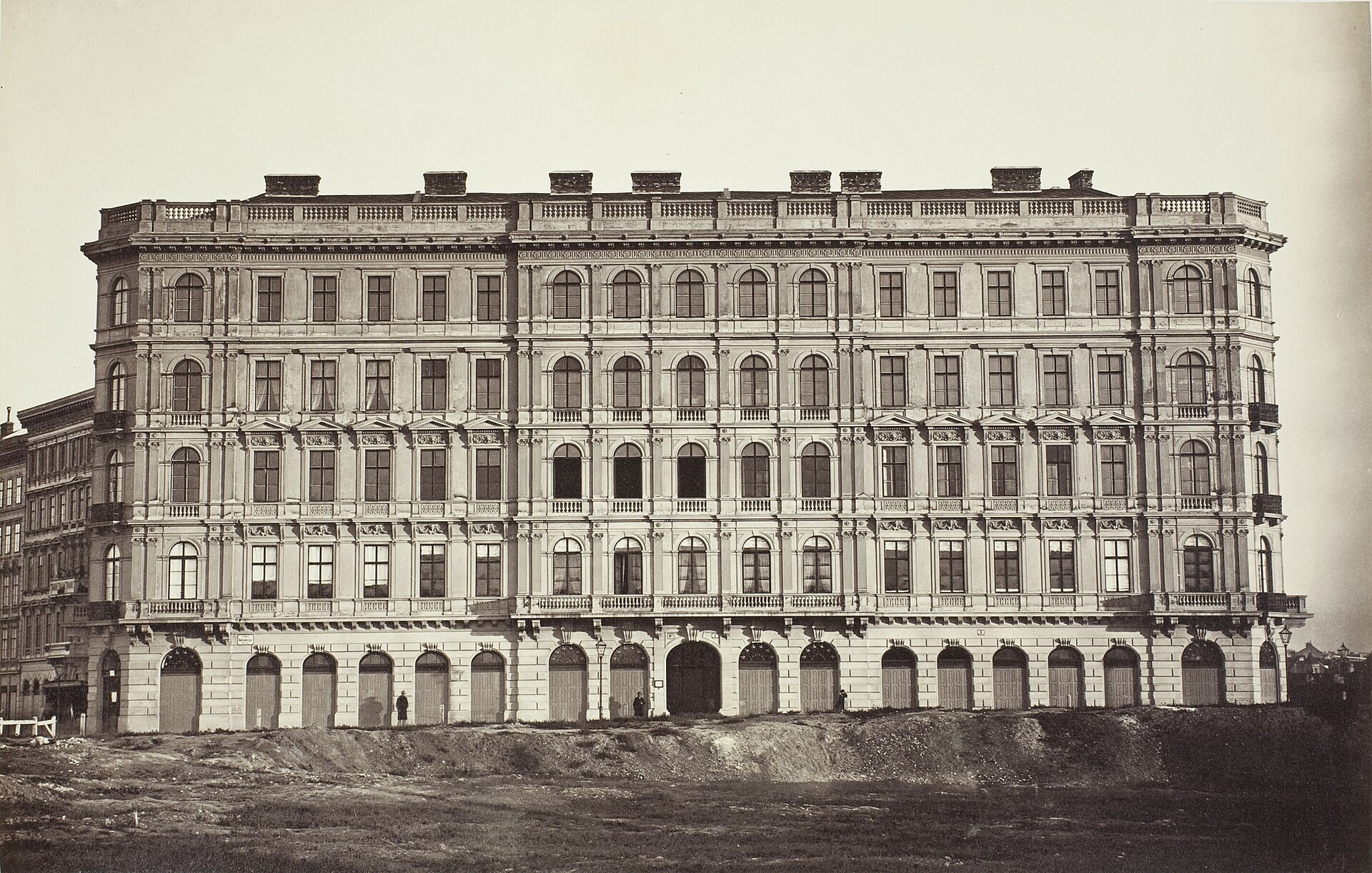
Babenbergerstraße 1–3, Vienna, photographed in the 1860s. Public domain, via Wikimedia Commons.
These homes were not thrown up quickly. They were built by hand, from solid brick, with thick masonry walls that keep the rooms cool through the summer and warm through the winter. Their façades were dressed in ornament: pilasters, cornices, sculpted window surrounds, the occasional caryatid. It was a confident architectural language that borrowed freely from the classical past.
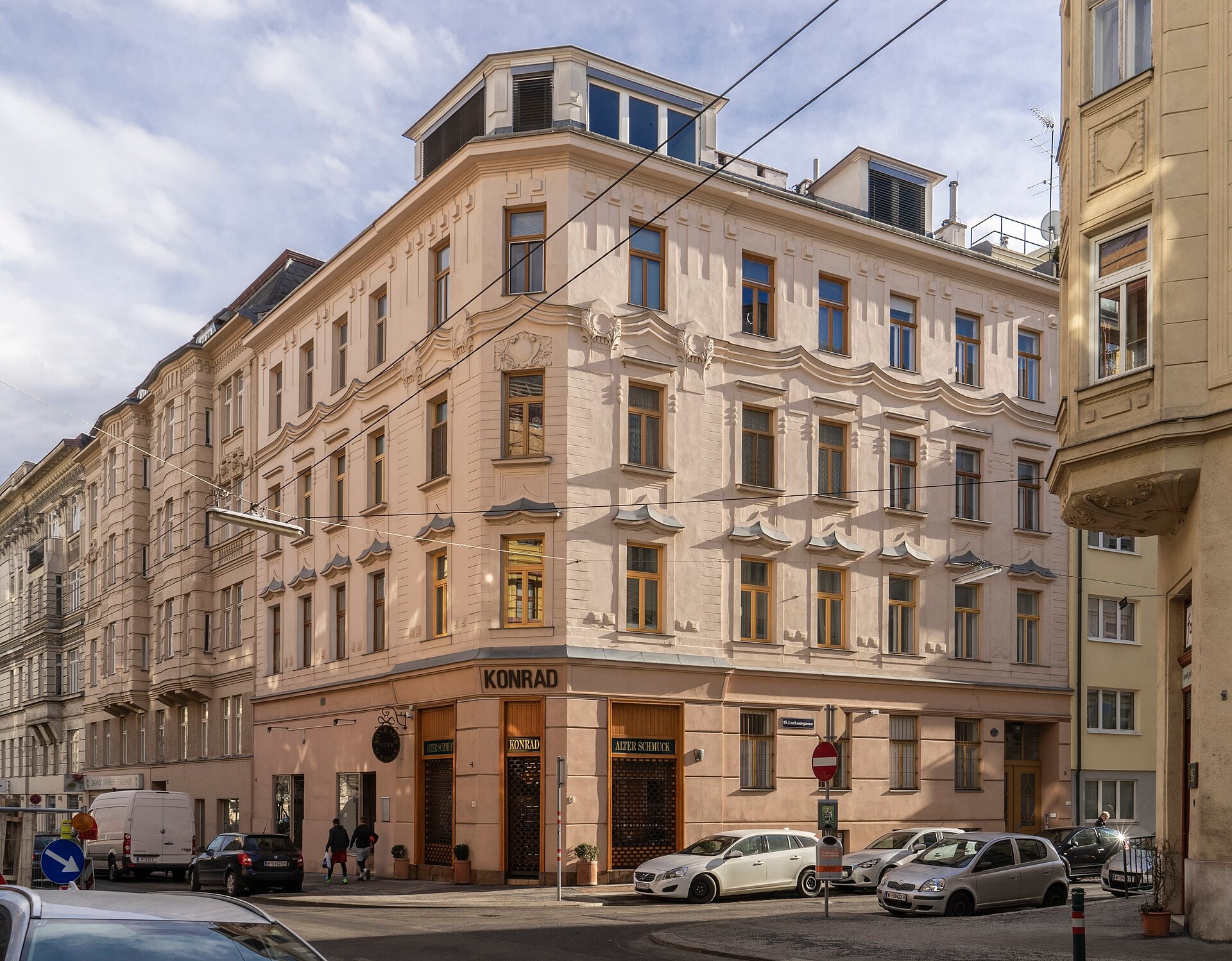
Währinger Straße 155, Vienna. Photo: Thomas Ledl, CC BY-SA 4.0, via Wikimedia Commons.
It is the same spirit of classical-traditional architecture that I return to again and again in my own work: the conviction that a building should be a pleasure to look at, not merely a machine for living in. More than a hundred years later, these buildings are still standing, still lived in, and still loved. That, more than any award, is the truest test of good design.
The details that define it
Ask anyone who has lived in one, and they will describe the same handful of features. It is these details, far more than the address, that make a Vienna Altbau unmistakable:
- Soaring ceilings. Room heights of three metres and often more, sometimes approaching four, give even a modest apartment a sense of grandeur that no modern flat can replicate.
- Stucco and cornices. Ornamental plasterwork frames the ceilings, while wall mouldings, ceiling roses and coving add rhythm and shadow to every room.
- Herringbone parquet. Solid oak laid in the classic chevron pattern: warm underfoot, and quietly luxurious.
- Tall box windows (Kastenfenster). The characteristic double windows flood the rooms with daylight while holding the noise of the street at bay.
- Sculpted façades. Atlantes and caryatids, garlands and pediments: the exterior carries the same craftsmanship you find within.
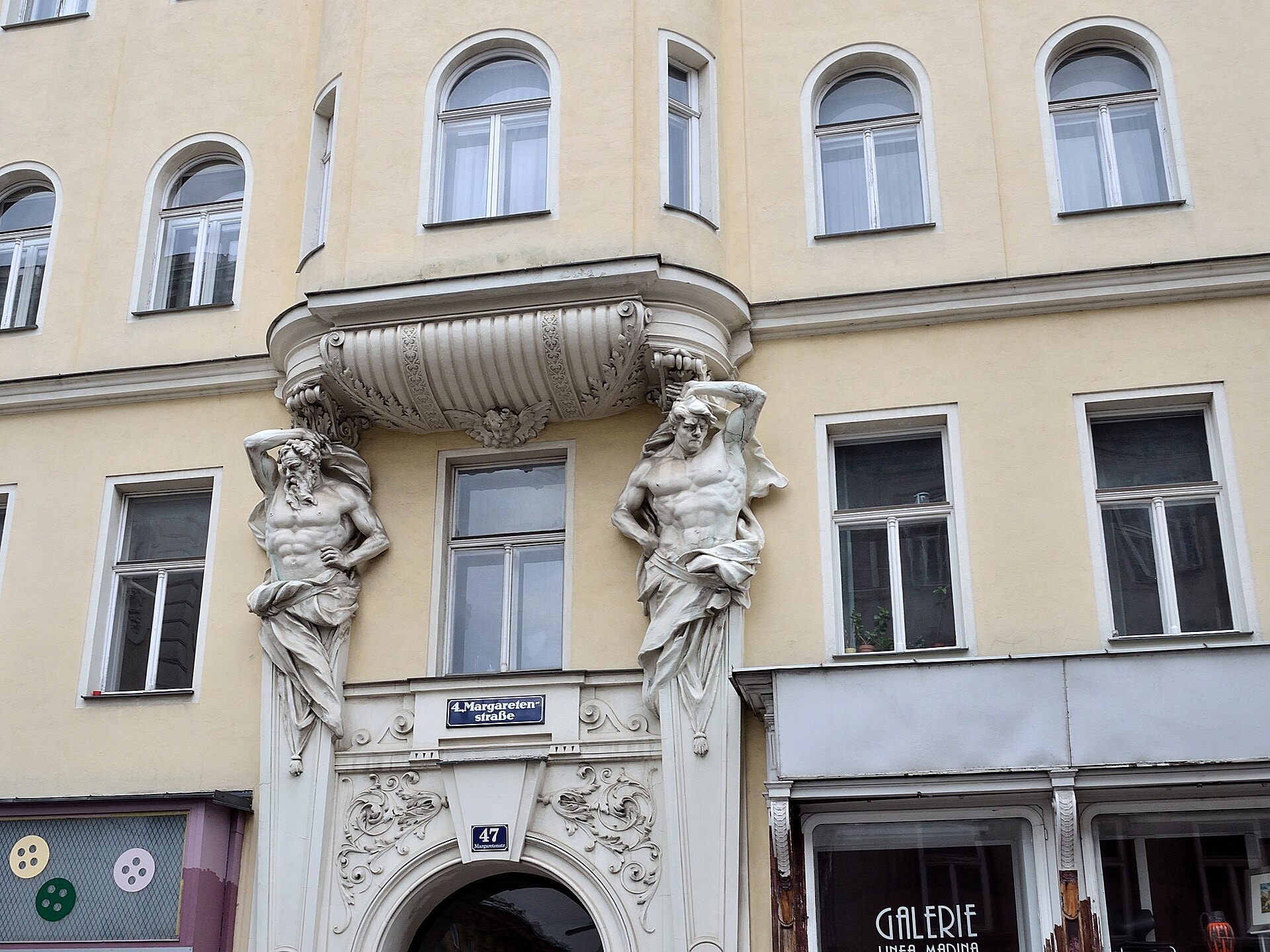
Atlantes on Margaretenstraße 47, Vienna. Photo: Herzi Pinki, CC BY-SA 4.0, via Wikimedia Commons.
None of this is decoration for its own sake. High ceilings and tall windows let a room breathe; honest proportions make it restful. When the Viennese speak of Altbaucharm, that untranslatable "old-building charm", this is precisely what they mean.
Living in an Altbau: styling for modern life
For all their beauty, these apartments ask something of you in return. A period Altbau begins not with a blank canvas but with a room that already has a strong personality, and the art of decorating one is learning to work with that character rather than against it.
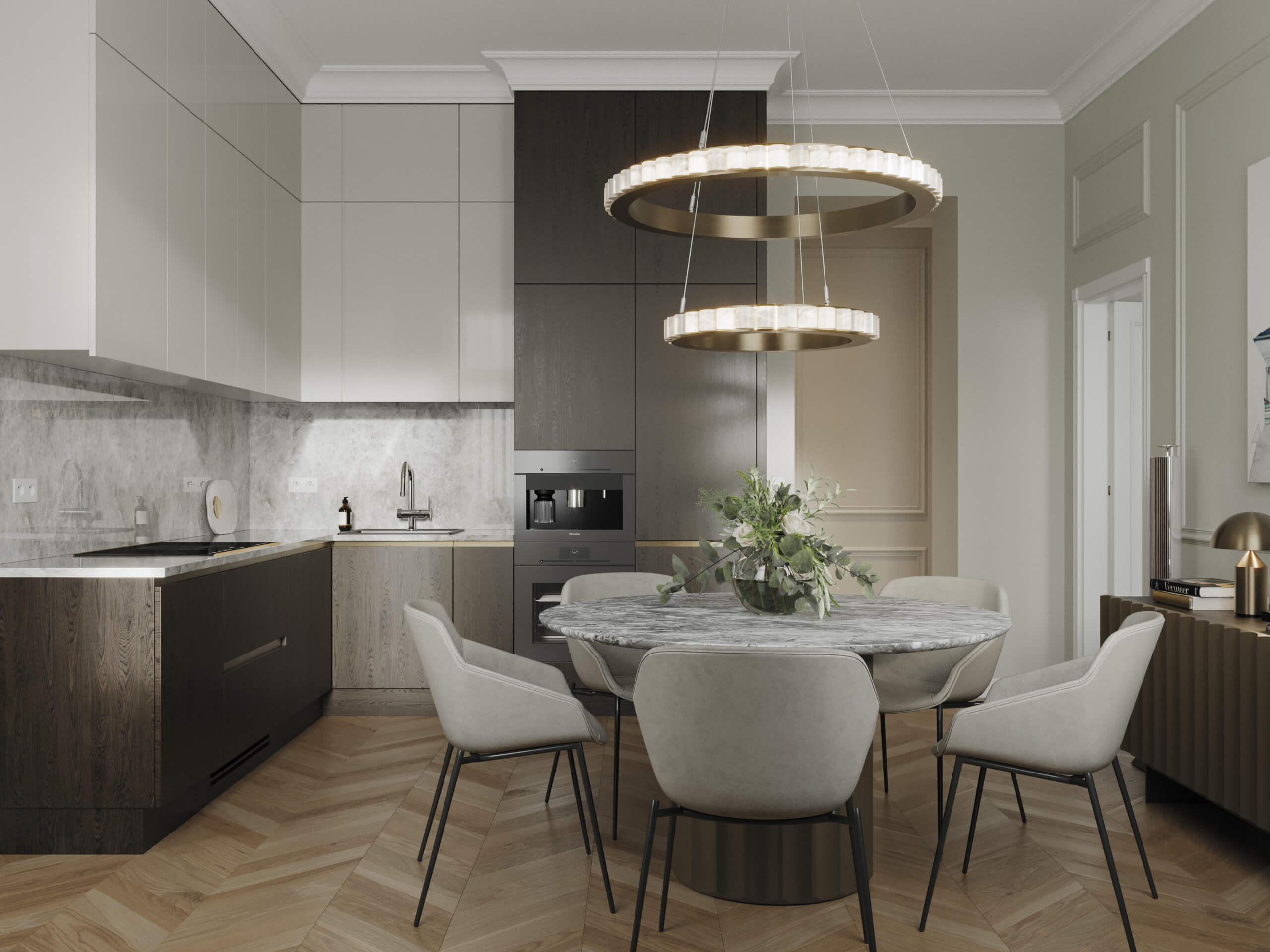
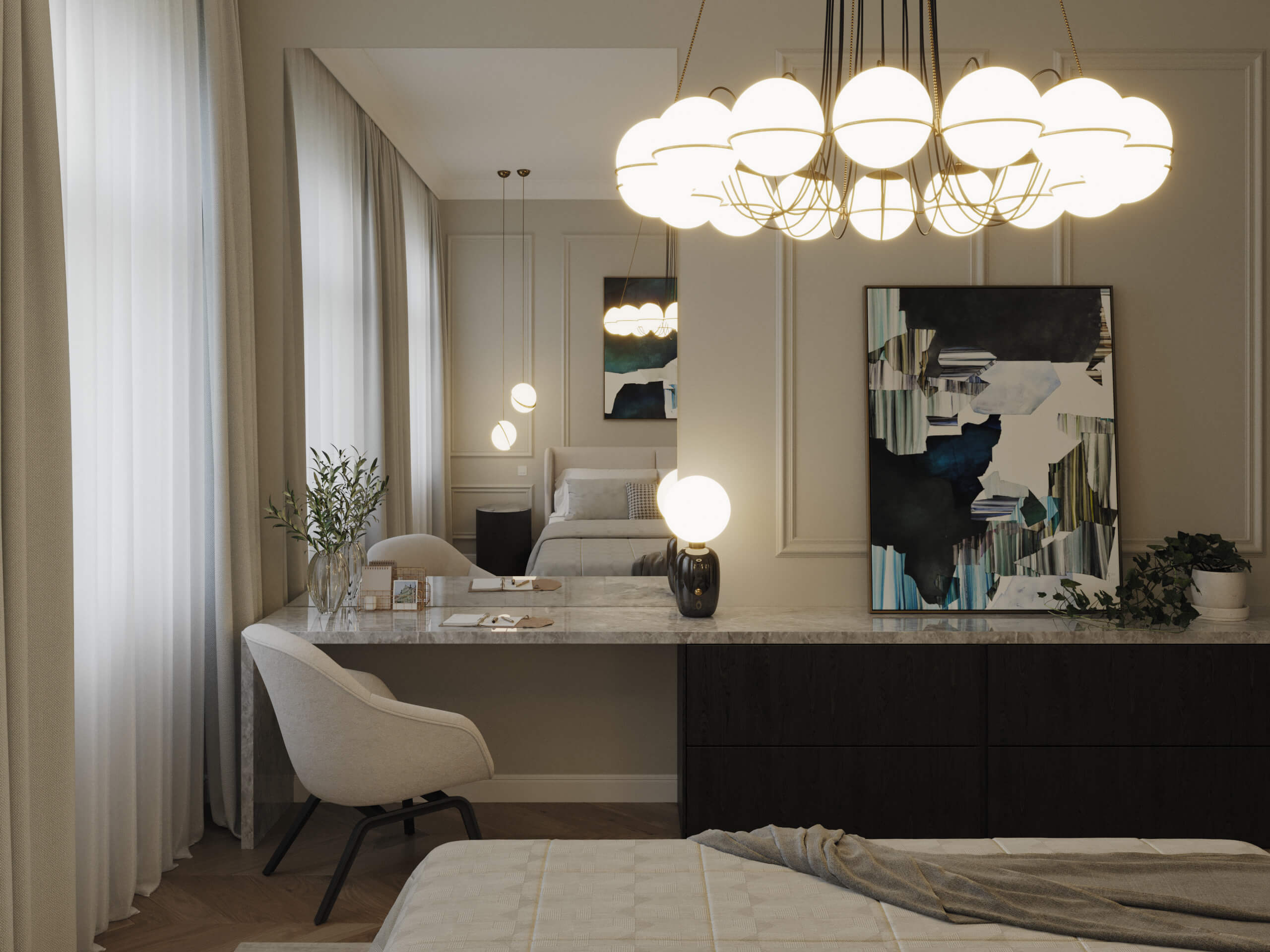
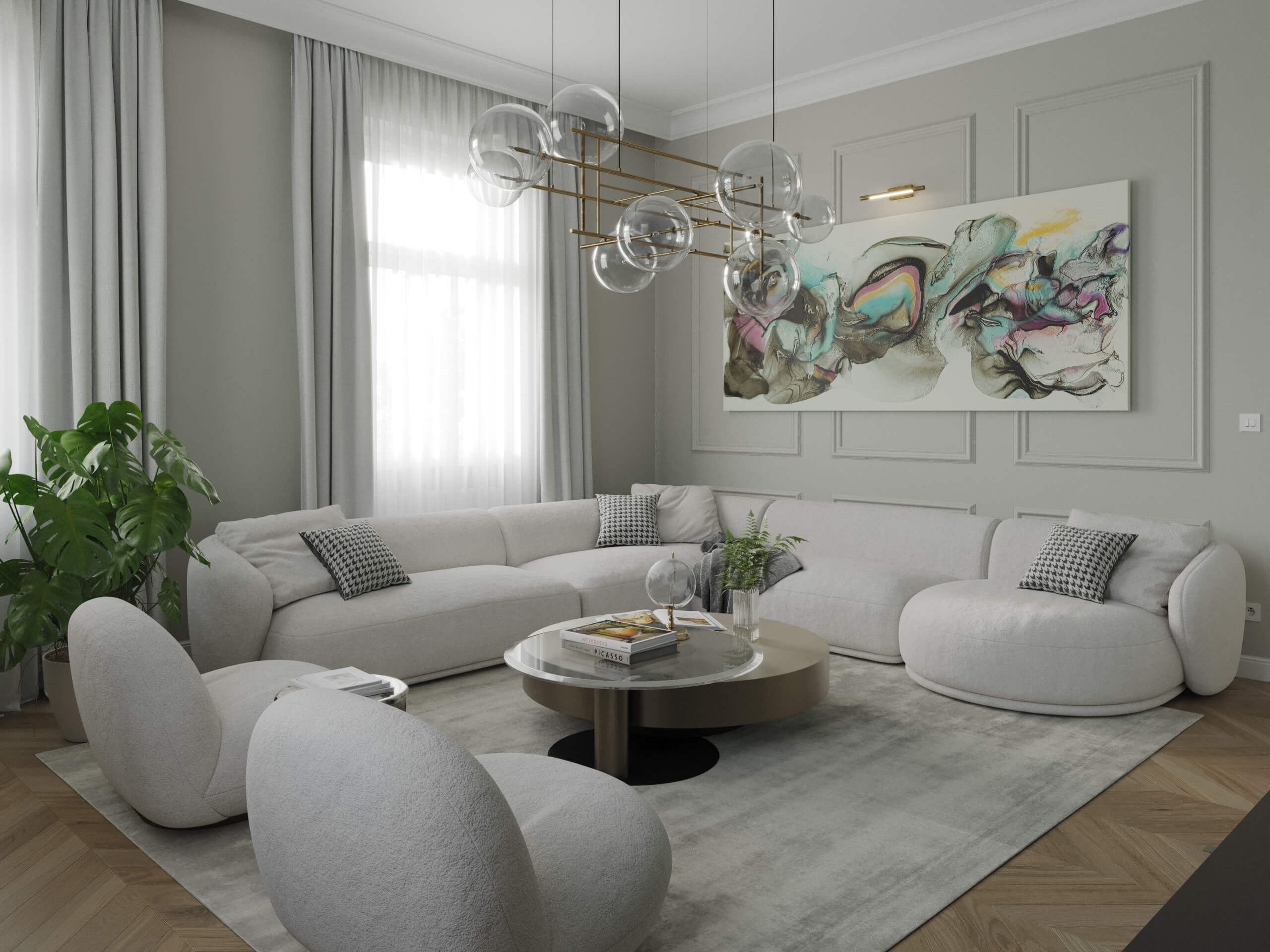
My first instinct is always to protect what is already there. I keep the cornices crisp, let the original parquet set the tone, and treat the tall windows as the natural focal point of each room. Then I design for the true proportions of the space:
- Draw the eye upward. A statement pendant or chandelier, full-height curtains and tall bookcases all make the most of the vertical volume.
- Give furniture room to breathe. Generous, well-spaced pieces suit these rooms far better than a crowd of small ones.
- Let the architecture lead the palette. I favour a light, neutral base of soft whites and warm greys, grounded with contrasting dark wood and a few brass details for a quiet touch of class.
Against that backdrop I furnish with pieces from makers I trust: a sofa by Meridiani, dining furniture by Bonaldo, lounge chairs by Gubi, appliances by Miele and SMEG. The point is never to show off the labels, but to assemble a home that feels collected rather than decorated: timeless, warm and unmistakably lived-in.
Breathing new life into a tired Altbau
Not every Altbau arrives in good shape. Many reach me tired and dated: beautiful underneath, but hard for a buyer to see past peeling paint and an awkward, outdated layout. Rather than gut a piece of history, I reimagine it in photorealistic 3D, so anyone can picture the home it is capable of becoming.
Take Fockygasse 22, a 93 m² apartment in a building from 1900 that had been sitting on the listing platforms for months with little interest. By reworking the floor plan and rebuilding the space digitally, preserving the cornices, the parquet and the tall windows while modernising everything around them, I turned a stalled listing into an immersive 360° virtual tour. Step inside the fully staged interior below and explore it from every angle.
My goal is never simply to sell a property; it is to evoke an emotion: to present not just an apartment, but the whole new lifestyle a home like this can deliver. That is the soul of the Altbau, brought into the present.
Are you a homeowner, agent or developer with a period apartment that deserves to be seen at its best? Get in touch and together, let's breathe fresh life into its timeless charm and bring your vision to life.
